
Indigenous stories were told across North America for thousands of years before anyone wrote them down, and today a small group of Native-owned and Native-focused publishers keeps those voices in print. If you have a manuscript ready, here is where 12 of them stand today, and which ones will read your work right now.
Six of the publishers below take proposals or manuscripts from authors today, from a university press in Arizona to tribally owned presses run by the Pechanga Band and the Chickasaw Nation. Three more read in windows or have paused to clear a backlog, and the last three publish Native books but post no current guidelines, so you contact them first. Several only consider Indigenous authors, and some only authors from a particular nation or region, so read each entry before you send anything. For each one you’ll find what it publishes, who may submit, and where its own guidelines live. If none of them fits your book, browse my list of publishing companies.
Submission policies change without notice, so check the publisher’s own page before you send anything, and never pay a reading fee. Last verified: October 1, 2026.
Native American publishers that take submissions now
1. The University of Arizona Press

The University of Arizona Press in Tucson publishes scholarly and general-interest books, and Indigenous studies is one of its strongest lists, alongside anthropology, archaeology, environmental studies, Latin American studies, and the American Southwest. Two of its acquiring editors, including the editor-in-chief, acquire in Indigenous studies.
The press accepts proposals and manuscripts by email, sent to the relevant acquiring editor. A proposal needs a letter of inquiry, an annotated table of contents, an introduction or sample chapter, and your CV, and accepted projects go to peer review. It is not looking for memoirs, festschrifts, or creative work outside its literary series. Submission guidelines.
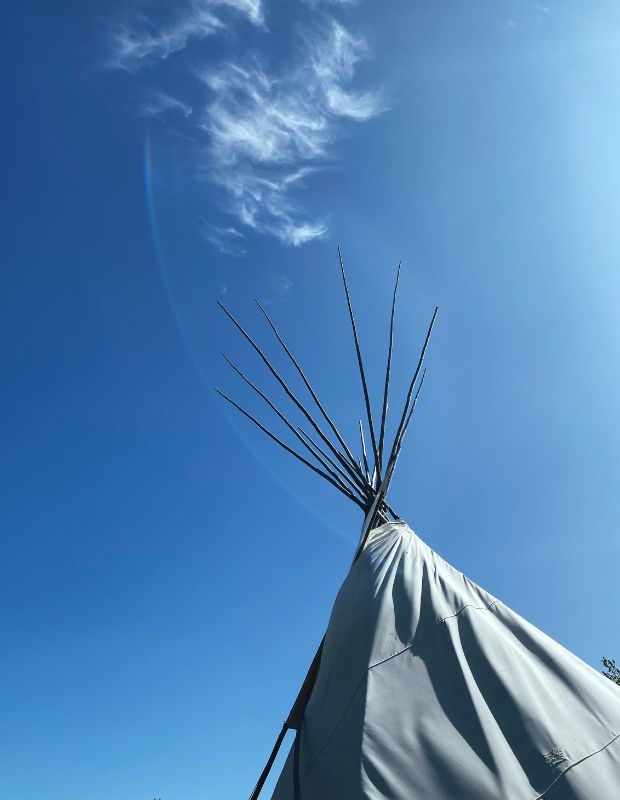
Did you know that Native American literature predates the arrival of European settlers by millennia? While initially passed down orally, many indigenous stories, traditions, and teachings have been committed to writing over the past few centuries. Today, Native American authors like Louise Erdrich, Sherman Alexie, and Joy Harjo, among others, continue to shine a light on indigenous perspectives, enriching global literature and ensuring the legacy of their ancestors is kept alive and accessible to new generations.
2. Great Oak Press
Great Oak Press was founded in 2014 by the Pechanga Band of Indians in Temecula, California, and is owned by the tribe. Its list mixes scholarly books with children’s picture books and literary titles, including a new edition of Jack D. Forbes’s Songs for California due in November 2026.
Great Oak accepts submissions by email or post. Every submission must include at least a sample chapter and a completed submission form, and anything sent without the form is automatically rejected. Submissions are reviewed in the order they arrive. Submission guidelines.
3. Theytus Books
Theytus Books is an Aboriginal owned and operated publisher in Penticton, British Columbia, and one of the longest-running Indigenous presses in Canada. Its mandate is books by First Nations, Métis, and Inuit authors, across fiction, non-fiction, poetry, and children’s books.
Theytus accepts manuscripts from Canadian Aboriginal authors only, on paper, with a cover letter and a bio that names your nation or community. For adult and young adult books, send a one-page synopsis and four sample chapters; for children’s books, send the full manuscript. It does not take email or simultaneous submissions, reviews manuscripts in two cycles a year, and contacts you only if it is interested. Submission guidelines.
4. Kamehameha Publishing
Kamehameha Publishing is the publishing arm of Kamehameha Schools in Hawaii, and its roots go back to the Kamehameha School Press of 1888. It describes itself as a Native Hawaiian publisher of community-based materials in Hawaiian language and knowledge: children’s readers, school resources, recovered archival texts, contemporary scholarship, calendars, and games.
Kamehameha Publishing accepts submissions through an online form on its site. Since March 2026 it reviews submissions through that form only and no longer takes materials by email. Submission guidelines.
5. Chickasaw Press
Chickasaw Press is the tribally owned press of the Chickasaw Nation in Ada, Oklahoma, established in 2006 to preserve and share Chickasaw history and culture. It publishes non-fiction research and scholarship on Chickasaw subjects by Chickasaw authors, scholars, and culture bearers.
The press welcomes proposals about Chickasaw subject matter in non-fiction from both established and first-time authors. Send a cover letter with either a complete manuscript or a table of contents, chapter summaries, and sample chapters, by post or to its editorial email address, and allow up to six months for a review. The guidelines are linked from the press page on the Chickasaw Nation’s shop site.
6. Wisdom Tales Press

Wisdom Tales is the children’s imprint of World Wisdom in Bloomington, Indiana. It publishes illustrated story books drawn from traditional cultures around the world, and Native stories are a large part of the list, from the Hopi folktale Rabbit Shoots the Sun to the Inuit Song of the Raven. It is not a Native-owned press, but its picture books regularly win awards, including four 2026 NYC Big Book Awards.
Wisdom Tales accepts submissions from authors and illustrators through an initial email inquiry to its director, and its FAQ page gives the address. Submission guidelines.
Native presses that read in windows
7. Salina Bookshelf
Salina Bookshelf in Flagstaff, Arizona, publishes Navajo (Diné) children’s books, many of them bilingual in Navajo and English, along with Navajo and Hopi language learning materials, and it is expanding into other Native American content.
Salina Bookshelf accepts manuscript ideas from Indigenous writers only. Send a one-page cover letter by post or email, and note that submissions are due on June 30 each year, so the next deadline is June 30, 2027. It replies only if it is interested, and if you have not heard back within six months, the answer is no. Poetry collections need at least 30 poems. Submission guidelines.
8. Inhabit Books
Inhabit Books is the bookstore of Inhabit Media, an Inuit publisher based in Iqaluit, Nunavut, with an office in Toronto. It works with elders, hunters, and storytellers to keep Inuit knowledge in print, and many of its children’s and young adult books also appear in Inuktitut or Inuinnaqtun.
Inhabit reads new work from writers who live in Nunavut and from Inuk authors living elsewhere, and illustrators can send a portfolio link. Its submission period runs from June 1 to September 30 each year, with decisions by October 31, so it is not accepting submissions again until June 1, 2027. Submission guidelines.
9. Kegedonce Press
Kegedonce Press has been Indigenous owned and operated since 1993, based at Neyaashiinigmiing, the community of the Chippewas of Nawash First Nation, and in Owen Sound, Ontario. It publishes fiction, short fiction, creative non-fiction, memoir, graphic novels, and children’s and young adult books by Indigenous writers, including Louise Bernice Halfe, Basil Johnston, Gregory Scofield, and Richard Van Camp.
Kegedonce only considers manuscripts from Indigenous authors in Canada. Because of a backlog of manuscripts under consideration, its submission window is temporarily closed, so it is not accepting manuscripts right now. When it reopens, it asks for a one-page synopsis, a sample of up to 20 pages, and a cover letter and bio with your First Nation, Métis, or Inuit affiliation. Submission guidelines.
Native publishers to contact before you submit
10. White Dog Press

White Dog Press was launched in 2013 as the creative imprint of Chickasaw Press. Where its parent publishes research and scholarship, White Dog Press tells the history, culture, and experiences of the Chickasaw people through historical fiction, children’s books, young adult novels, poetry, and other creative work.
White Dog Press does not post separate submission guidelines, and the Chickasaw Press guidelines cover non-fiction only, so contact the press before you send a creative manuscript.
11. 7th Generation
7th Generation is an imprint of Native Voices, the Indigenous list of the Book Publishing Company in Summertown, Tennessee. Native Voices is dedicated to celebrating Indigenous cultures through literature, and 7th Generation publishes biographies of Native role models and short, high-interest novels for young readers. Recent Native Voices titles include Cherokee syllabary board books by Brad Wagnon.
Its parent company is not Native-owned, and the site has no current submission guidelines, so contact the publisher through its website before you send a manuscript.
12. Pemmican Publications

Pemmican Publications in Winnipeg, Manitoba, is one of the oldest Métis publishers in Canada. Its mandate is books by Red River Métis authors and illustrators, with an emphasis on Métis stories, and its recent titles include Tiffany Walsh’s No Need for Ceremony and Murray Gillespie’s A Wild Life.
Pemmican is rebuilding its website and has no submission guidelines online at the moment, so if you are a Red River Métis author, contact the press directly before you send anything.
Names you may be looking for
Koa Books
Koa Books was a Hawaii-focused press whose twelve titles have been sold to other publishers, with the Koa Books name and most of the list now at Chiron Publications. It no longer publishes new books.
Eaglecrest Books
Eaglecrest Books in Duncan, British Columbia, made leveled early-reading books featuring First Nations children for classrooms. Its website has not added new titles in years and lists no submission process.
Blue Hand Books
Blue Hand Books published Native American fiction and non-fiction from 2011, but its website no longer exists, so there is no current way to submit to it.
Final Thoughts
If you are an Indigenous author, start with the presses that publish your own nation or region: Theytus and Kegedonce in Canada, Inhabit in Nunavut, Kamehameha in Hawaii, Salina Bookshelf for Navajo stories, and the Chickasaw and Pechanga presses for their own communities. For scholarly work, the University of Arizona Press is the strongest fit, and Wisdom Tales suits a picture book drawn from a traditional story. Mark the June windows at Salina and Inhabit in your calendar, and follow each publisher’s guidelines exactly. Next up, you may want to explore my list of children’s book publishers.

Rafal Reyzer
Hey there, welcome to my blog! I'm a full-time entrepreneur building two companies, a digital marketer, and a content creator with 10+ years of experience. I started RafalReyzer.com to provide you with great tools and strategies you can use to become a proficient digital marketer and achieve freedom through online creativity. My site is a one-stop shop for digital marketers, and content enthusiasts who want to be independent, earn more money, and create beautiful things. Explore my journey here, and don't forget to get in touch if you need help with digital marketing.