
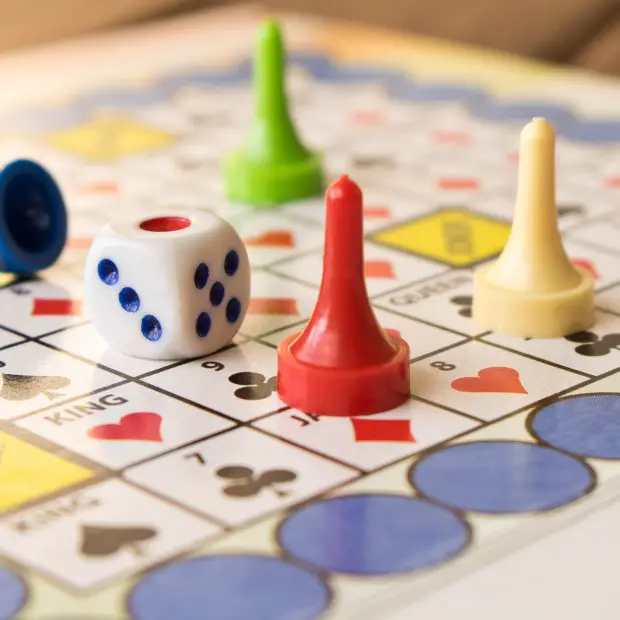
You have a prototype and a shortlist. Eight of the twenty publishers below will look at a designer’s game right now, six say no in plain words on their own sites, and six publish no designer route at all.
So the list is ordered by what a designer can do with it. The eight open doors come first, with what each publisher wants and what it rules out, because fit is the whole game here. Then the six that have paused, several of them with a reason that tells you whether it is worth waiting. Then the six that publish no designer route, recorded as unknown instead of guessed at in either direction.
Submission windows open and close without notice, so confirm on the publisher’s own page before you send anything, and never pay a publisher a fee to read your game. Last verified: July 31, 2026.

Did you know that the game “Monopoly,” often sparking hours of family competition, was originally designed to teach players about the dangers of wealth concentration and unbridled capitalism?
Where a designer can pitch a game today
These eight publish a working route for designers and say, with varying levels of detail, what they are looking for. Read the restrictions as carefully as the invitations, because most of these houses reject far more games for being the wrong shape than for being bad.
A faster route to readers
Publish your book worldwide on your terms
PublishDrive distributes ebooks, print books, and audiobooks to 50+ stores and 240,000+ libraries worldwide from one dashboard.
Affiliate disclosure: I may earn a commission if you become a paying PublishDrive customer through this link, at no extra cost to you.
1. Stonemaier Games
The publisher of Wingspan, Scythe, Viticulture and Euphoria, based in St. Louis, and the most transparent submissions process on this page by a distance. Stonemaier Games is open to submissions, though it describes itself as tentatively open: its release schedule is booked for the next few years, and it keeps reading pitches anyway instead of missing a good fit.
The route is a form asking for a sell sheet, a visual overview and/or a short video of a few turns. That is the entire first step, and no prototype goes in the post unless they ask for one and give you an address. You hear back within about a month if they want more. They also say, unusually, that they will not be offended if you pitch the same game elsewhere in the meantime.
The filters are strict and published in advance. They want event games, the main course of a game night running one to two hours, that are unique in some real way and flow well without phase-heavy turns. Player count is a hard gate: the game must work for at least two players without a bot and scale to five or six, so designs that top out at four are ruled out. Games built around a companion app are excluded, as is anything already published or crowdfunded. There is also a standing call for one light, short, easy-to-learn co-operative game for roughly three to seven players, in the vein of The Gang or Just One.
If you get past the form, they will ask for video of a real play session, a prototype, or an invitation to their annual Design Day. Submission guidelines.
Working on a book of your own? You can publish it yourself with PublishDrive (affiliate link).
2. Czech Games Edition
Czech Games Edition, based in Prague, accepts submissions through a dedicated form that takes a description, files and a video of the game being played in English. Galaxy Trucker, Codenames, Alchemists, Tzolk’in and Lost Ruins of Arnak all come from this house, and the brief it publishes matches that catalogue closely.
What it is hunting for: medium-heavy and heavy euro games with a mechanism or twist it has not seen before, funny and original in tone, and without violence. Typical play time across its portfolio is 60 to 180 minutes. It adds that it is open to other shapes too, including party games and children’s games, so the euro brief is a bias and not a wall.
Three things are ruled out explicitly: roleplaying games, anything too close to a game that already exists, and games that play in under twenty minutes. It warns that a reply can take a while.
Worth noting if you are working from an older list: the business-contact URL that circulates now redirects to the general contact page, where the submissions form is signposted separately from the replacement-parts form. Submission guidelines.
3. Gigamic

A French publisher operating since 1991, and the only company on this page that publishes its full editorial economics. Gigamic accepts submissions from designers, and explains what signing actually means: a publishing contract in which the designer grants exploitation rights and earns royalties on every copy sold, with the publisher carrying material selection, manufacturing quotes, art direction, production and marketing.
The numbers are the useful part. Between conventions and email it receives around 800 proposals a year, answers every one, briefly explaining why when the answer is no, and publishes four or five. If a project interests them they ask for a copy and play it repeatedly across the team.
It wants games with simple rules you can explain in a few minutes, under an hour of play, with original mechanics, on its Ambiance line (Wazabi, Galèrapagos) or its Tin boxes line (Panic Lab, Différence, Tutti Frutti). Games leaning on miniatures and plastic components are outside what it is currently making, and educational games are outside its lines altogether, and it says plainly you should look elsewhere with those.
It also addresses the fear every first-time designer has, that a publisher will steal the idea, and points to the French Soleau envelope as a cheap way to timestamp your work if you want the reassurance. Its team attends Cannes, Parthenay and Essen, where slots are limited but sometimes available on the spot. Submission guidelines.
4. Hobby World

The largest Russian board game publisher, headquartered in Moscow with a publishing arm in Belarus, and the company behind Spyfall. Hobby World accepts submissions by email and says it is constantly looking for new authors with original ideas.
It asks for complete rules and a prototype, both as PDFs. The rules have to be good enough to play from without you there to explain anything. Physical prototypes are not part of the process and neither are in-person meetings, with one exception: the author contests run at the Igrokon festival in Moscow and Granikon in St Petersburg, where you can show a prototype to editors face to face.
The testing bar is stated as a number, which is rare and very helpful. It considers only fully developed and tested games, and defines “tested” as at least ten plays of the current version by two or three different groups, including sessions you did not attend. It usually replies within a month.
One honest limitation it publishes up front: it will not evaluate a bare idea or advise you on where to take a design. Send a finished game or do not send yet. Its contacts page carries only retail, wholesale and warehouse details; the designer route lives in the FAQ. Submission guidelines.
5. Blue Orange Games
Founded in San Francisco in 1999 by Thierry Denoual, named after a line from the French poet Paul Éluard, and focused on family games that are quick to teach. Blue Orange Games accepts submissions by email, year round, and is refreshingly concrete about the process.
Send a brief description of the game, a rules document explaining how to play, and photographs of the prototype. If it is interested, it replies asking for the prototype itself. Expect around three months for a decision: designs are looked at year round but decided in a handful of product evaluation meetings where several are reviewed at once.
It also states something most publishers leave you to discover: it will not sign a non-disclosure agreement in order to evaluate a design, though it undertakes not to share submissions outside company personnel and company-coordinated playtest groups. That is standard practice across the industry, so ask accordingly.
Since a distribution agreement announced in July 2025 it also handles IELLO’s titles in the United States. That is a commercial partnership between two separate companies, not common ownership, so a pitch to one is not a pitch to the other. Other publishing companies in San Francisco are worth a look if you are working the Bay Area. Submission guidelines.
6. Pandasaurus Games

An Austin, Texas hobby and mass-market publisher run by co-owners Molly Wardlaw and Nathan McNair, publishing since Tammany Hall in 2012 and responsible for Machi Koro, Dinosaur Island and The Mind. Its titles reach Target, Barnes & Noble and GameStop as well as hobby stores, which makes it one of the more commercially broad destinations on this page.
Pandasaurus Games accepts submissions, and the route is a plain email address and not a form: game design submissions go to support@pandasaurusgames.com, listed on its support page alongside separate addresses for marketing and general enquiries.
It publishes no formal brief, so the catalogue is your guide: accessible hooks, strong art direction, and designs that work as well on a kitchen table as in a game shop. Keep the pitch short and let the sell sheet do the work.
If you find a Pandasaurus submissions link pointing at an anchor on its About page, ignore it; that section is gone and the support page above is the live route. Nearby, publishing companies in Austin covers the wider local scene. Submission guidelines.
7. Grand Gamers Guild
An independent publisher whose catalogue runs from light to heavy strategy: the Endeavor series, The Artemis Project, Tír na nÓg, the Endangered line and the 18Escape escape-room games. Grand Gamers Guild welcomes pitches from designers, with a “Designers & Illustrators” block on its contact page saying it is always open to speaking with creators who bring tabletop games to life, and a button to send a sales sheet.
That makes it one of the lower-friction approaches here: a sales sheet, not a prototype, not a form with twenty fields. Illustrators are invited through the same route.
You may have read that Grand Gamers Guild hides its guidelines behind a sign-up. It does not. The /pages/contact address silently redirects to the homepage, which is where that impression comes from; the working path is simply /contact, and everything is visible on it. Submission guidelines.
8. Leder Games

The publisher of Root and the two Vast games, and a company that has built a reputation on asymmetry and strong illustration. Leder Games accepts proposals, and it is the most heavily qualified invitation here, which is exactly why it belongs in this section and not in either of the ones below.
Board game proposals go to support@ledergames.com. In the same breath the company warns that it rarely works with outside designers and guarantees neither a response nor a commitment of any kind. Treat it as a long shot that is nonetheless officially open, and calibrate your expectations before you spend a week on the pitch.
The livelier opportunity is the other half of that page. Leder Games invites pitches to work within its own IP, covering video game adaptations, comic books, television and film, roleplaying games and a wider range of merchandise, and it names the properties it will license: Vast: The Crystal Caverns, Vast: The Mysterious Manor, and Root, excluding the existing Root video game port and the Root RPG. Proposals want a detailed outline, your organisation, your methodology and what support you would need.
Note that Leder’s ordinary contact page carries none of this. The business development page does. Submission guidelines.
Publishers that have paused the door
These six are active, healthy companies still putting out games. Each one has published that it is not taking designer pitches at the moment, five on their own sites and one on its help desk. Several keep the page titled “Submissions” anyway, which is how they keep turning up elsewhere as open.
9. Fantasy Flight Games

Fantasy Flight Games does not accept unsolicited submissions, and that covers game design, development and writing alike. It is stated flatly on its contact page, which is the page most lists send designers to under the heading “submission guidelines”.
The company is very much alive: operating from 1995 County Road B2 West in Roseville, Minnesota as part of Asmodee North America, and still the definitive publisher of licensed, deeply thematic games and of the Living Card Game line. It also asks that you notify it in advance instead of dropping in, which tells you how much unsolicited traffic it gets.
There are two real routes for creatives, and neither is a design pitch: the playtesting programme and the freelance opportunities page, both linked from its “More” menu. Freelance work, whether writing, development or art, is how most people get inside a house like this one. If Minnesota is your region, publishing companies in Minnesota covers the wider local field.
10. Renegade Game Studios

Renegade Game Studios is not accepting submissions. Its help centre answers the question “How can I submit my game idea for your consideration?” with the reason: the volume of games it has recently received has filled its pipeline.
The studio remains busy, with a catalogue spanning strategy, deck-building, social deduction, family games and roleplaying, and it collaborates widely with outside designers and artists, which is presumably why the queue filled up in the first place. A pause driven by volume is the most reversible kind, so re-check it instead of crossing it off.
One structural note if you go looking: that answer does not live on renegadegamestudios.com. It sits on a third-party help-desk domain, which is why the status is easy to miss.
Keep your publishing moving
Self-publish without waiting on submissions
PublishDrive lets you distribute your ebook, print book, or audiobook worldwide while managing your catalog from one dashboard.
Affiliate disclosure: I may earn a commission if you become a paying PublishDrive customer through this link, at no extra cost to you.
11. Bezier Games
Bezier Games is not accepting submissions, because its development queue is full for the coming year. The company says so at the top of the page, which is still titled “Game Submissions”.
It is the house behind One Night Ultimate Werewolf and Werewords, with a catalogue built around social deduction and party play. It lists Golden Geek and Mensa Select awards and a Spiel des Jahres nomination and recommendation among its products, and Werewords was a Spiel des Jahres nominee in 2019.
There is one door still open on that page, and it is a good one for a different kind of creator: artists and graphic designers are actively invited to send portfolios, and the company says it is always on the lookout for talented people. If you illustrate as well as design, that is a live opportunity.
12. Breaking Games
Breaking Games is not accepting submissions. The page at /pages/game-submissions leads with that one sentence, which makes it the shortest and clearest answer in this whole list.
The company is still trading and still releasing games, so this is a change of posture, not a company in trouble.
One distinction worth drawing carefully, because it is easy to misread as an open door: the same site offers prototype and manufacturing help. That is a paid production service you buy, not a publishing deal where the company funds your game and pays you royalties. Both are legitimate; they are opposite directions of money flow, and a designer looking for a publisher should not confuse the two.
13. North Star Games
North Star Games does not accept submissions from outside designers. The statement sits on its own submissions page and is signed by founder Dominic Crapuchettes, which makes it one of the more candid explanations in this industry.
His reasoning is worth reading in full if you are trying to understand how publishers think. The Maryland studio designs and develops internally, and its games often take three to five years before they are ready for art. Because that bake time is so long, it fills the gaps by licensing games already published overseas instead of taking pitches. He notes that playing unfinished prototypes with designers is one of his favourite pastimes, so the pause is about strategy and not appetite.
The company is behind Wits & Wagers, Evolution, Oceans and Nature, with digital versions on Board Game Arena. There is one narrow route he does describe: if you find a published game with strong art that would fit the catalogue, message them on social media with the BoardGameGeek listing, and they may ask the publisher for a demo copy.
14. Floodgate Games
Floodgate Games is not accepting submissions in the ordinary sense: it says it has a full backlog of projects and is not actively seeking new ones. Its game-submissions page leaves one narrow opening, for a designer who truly believes their game is extraordinarily unique, interesting and fun: reach out, and they will go from there.
Read that honestly. It is an invitation to a very small number of people, and the publisher has told you in advance that the odds are poor. If your game is good but conventional, this is not the year.
Floodgate Games, LLC operates from Golden Valley, Minnesota, and is known for Sagrada, Vault Wars and Decorum, along with a very useful designer-diary series on its own blog. Those diaries repay reading whatever your target publisher, because they are one of the better public records of how a game gets from prototype to shelf.
Publishers with no published route for designers
These six are trading normally and publishing games. None of them states a position on designer pitches anywhere on its site, so this page records the honest answer, unknown, instead of inventing one in either direction. In practice that usually means work arrives through agents, conventions and existing relationships. The way in is to meet people, not to send an email into a void.
15. Z-Man Games
Publishing since 1999 and now an Asmodee studio, Z-Man Games is responsible for Pandemic, Carcassonne and Love Letter, and describes its own range as running from casual to complex and cooperative to competitive.
Its contact form offers three topics: rules questions, artists looking for work, and playtesting the next Unexpected Games title. Its site publishes no game-design route, so nothing about designer pitches can be verified here either way.
The artist and playtester options are not consolation prizes. Playtesting in particular puts you in a room with developers, and for a designer trying to get known inside a big publishing group that is a more realistic first step than an unsolicited email.
16. Rio Grande Games

The American house most closely associated with bringing German-style design to English-speaking players, operating from a PO box in Placitas, New Mexico, with Dominion and a deep euro catalogue behind it.
Its contact page is given over entirely to missing and damaged components, replacement parts, and what it will and will not replace, down to the detail that Dominion card guides are tucked inside the rulebook, and that slightly misshapen wooden pieces are a property of wood and not a defect. Everything else routes to a general support form.
Its site publishes no designer route, so this page makes no claim about pitches. That contact page also sits behind a security block that turns automated tools away, which is one reason its content rarely gets re-checked by anyone maintaining a list.
17. Capstone Games
Based in Cincinnati, Ohio, and answering the question on its own About page, Capstone Games publishes strategy, euro-style and economic games ranging from accessible family titles to deep hobby experiences: Ark Nova, the Terra Mystica universe, the Iron Rail series and Pagan: Fate of Roanoke.
Neither its About page nor its contact page publishes a designer route. The contact forms cover questions, comments and missing pieces; the About page covers location, team and catalogue. So no claim about pitches can be verified.
The site has also moved to a new platform, which retired its old /contact/ URL. That address now redirects, so a link to it appears to work while landing somewhere that answers a different question. Publishing companies in Cincinnati covers the rest of the local field.
18. Van Ryder Games
Operating from Spring Hill, Tennessee, a short drive south of Nashville, Van Ryder Games specialises in narrative-driven design: Final Girl, Hostage Negotiator, Detective: City of Angels, and the Graphic Novel Adventures line that fuses gamebooks with tabletop play.
Its contact page is a general enquiry form covering product issues and everything else, and its site publishes no designer route, so no claim about pitches can be verified.
Given how specific its house style is, namely solo and one-versus-many horror, branching narrative and comic-book presentation, this is a publisher where a cold pitch of a conventional euro would be wasted regardless. Designers based nearby may find book publishers in Nashville useful for the wider regional picture.
19. IELLO

Founded in Nancy in 2004 by Cédric Barbé and Patrice Boulet, IELLO began in distance selling of trading card games, moved into wholesale distribution, started co-publishing in 2008 and publishing its own games in 2009. More than a hundred titles later, King of Tokyo, Unmatched and Bunny Kingdom have made it a major international name, with LOKI as its children’s studio.
There is no standing submissions page on its site. The address that circulates for it is the after-sales service page, the one for missing cards and replacement components, and it is written for players rather than designers. Its only first-party author page is an announcement of designer meetings at the Parthenay festival dating from 2021, which gives edition@iello.fr as the contact address; a call for dice-game prototypes in February 2026 used the same address.
So the address is real and the appetite is real, but there is no current standing policy to point you at, which is why this page makes no claim either way. If you are pitching a French publisher, watch their festival calendars: Cannes and Parthenay are where these conversations happen.
20. Greater Than Games
The most eventful entry here, and the one where an out-of-date list does the most damage. Greater Than Games was founded in St. Louis in 2011 by Christopher Badell, Adam Rebottaro and Paul Bender around Sentinels of the Multiverse, and published more than fifty titles in its first decade, Spirit Island among them.
In 2021 the distributor Flat River Group acquired it. In April 2025 FRG cut most of the team and halted new projects, citing economic pressure and tariff uncertainty. In April 2026 the digital developer Handelabra Games, which had spent over a decade making Sentinels video games, bought the Greater Than Games brand and the Sentinel Comics IP from FRG, stating openly that it did not want to become a tabletop publisher and was buying to protect the rights until a publisher could be found. On 12 May 2026 the founders Bender and Badell reacquired both, and the company trades again independently, with a core of returning veterans, Definitive Edition reprints heading to crowdfunding in 2027 and a new expansion in progress.
Two practical consequences. First, the company now operates from a new domain, greaterthan.games; the old address is a landing page pointing at it, and the /contact/ path that other lists still link is a 404. Second, with the business barely a few months into independence, no designer submission route is published on either site, so no claim about pitches can be verified. Nearby, publishing companies in Missouri covers the wider St. Louis and Kansas City field.
How to pitch a board game without wasting the year
The single most useful habit is the cheapest: open the publisher’s submissions page and read it to the bottom before you write anything. Twelve of the twenty entries here would have been resolved that way, and several of these houses reject on criteria they publish in advance: player count, play time, component style, theme.
Match the catalogue, not the reputation. Gigamic tells you it publishes four or five games from around 800 proposals. Those odds improve enormously when your game is the shape the publisher already sells and collapse when it is not, and no amount of polish fixes a mismatch.
Finish the game first. Hobby World’s ten-plays-by-three-groups standard is the most explicit version of a bar every publisher applies quietly, and blind playtesting, meaning sessions you are not present at, is what separates a design that survives contact with strangers from one that only works when you explain it.
Lead with the sell sheet. Almost every open door here asks for the same first step: a one-page sell sheet, a short video, sometimes a rules document. Nobody wants a prototype in the post first, and several publishers explicitly ask you not to send one uninvited.
Conventions do the work email cannot. Gigamic, IELLO and Hobby World all describe meeting designers at festivals, and Stonemaier runs an annual Design Day. Six of the publishers here are effectively relationship-driven; standing in front of someone with a playable prototype remains the highest-conversion pitch in the industry.
Finally, understand which direction the money moves. If a company asks you to pay for production, that is a manufacturing service, not a publishing deal. Both exist legitimately in this industry, and the distinction is the same one that separates trade publishing from author-funded publishing in books, and the hybrid publishing companies guide covers that split in detail.
Conclusion
Eight of the twenty publishers here will look at a designer’s work today, and they are not the eight a casual list would predict. Stonemaier Games and Czech Games Edition publish the most detailed briefs in the business. Gigamic tells you the real odds. Hobby World tells you exactly how tested “tested” means. Blue Orange Games and Pandasaurus Games keep plain email routes open year round. Grand Gamers Guild asks only for a sales sheet. Leder Games is a long shot that says so honestly.
The other twelve are not failures, and none of them has stopped making games. Six have simply filled their pipelines, several after being overwhelmed by the volume of designer submissions. Six work through channels they do not advertise. Knowing which is which is worth more than a longer list.
Re-check before you send. Bezier Games’ pause is stated as covering the coming year. Renegade’s is explicitly about volume. Floodgate keeps a door ajar for something exceptional. These states change, and the publishers themselves are the only reliable source.
If none of these fit, the full 2,000+ publishing companies directory is the hub for this series, traditional publishers covers the book houses that read unagented work, and publishing companies in Oklahoma continues the regional tour.

Rafal Reyzer
Hey there, welcome to my blog! I'm a full-time entrepreneur building two companies, a digital marketer, and a content creator with 10+ years of experience. I started RafalReyzer.com to provide you with great tools and strategies you can use to become a proficient digital marketer and achieve freedom through online creativity. My site is a one-stop shop for digital marketers, and content enthusiasts who want to be independent, earn more money, and create beautiful things. Explore my journey here, and don't forget to get in touch if you need help with digital marketing.