
Fifteen publishing companies in the Philippines. Six tell you exactly where to send a manuscript, four sell you a service, and five are real trading businesses whose submission routes have stopped working.
That last group is why the list below is ordered by what a writer can actually do with it. One publisher’s entire website returns a PHP error on every page. Another serves a single image and nothing else. A third has vanished from its own university’s site. A fourth’s “Manuscript submissions” link, on its own homepage, is a 404. A row of company names with “Submission Guidelines” underneath each one tells you none of that. If you want the wider field afterwards, the 2,000+ publishing companies directory is the hub for this series, and book publishers in India covers the nearest comparable market.
Policies change without notice, so confirm on the publisher’s own page before you send anything, and never pay a reading fee to a publisher that says it pays you. Last verified: July 31, 2026.
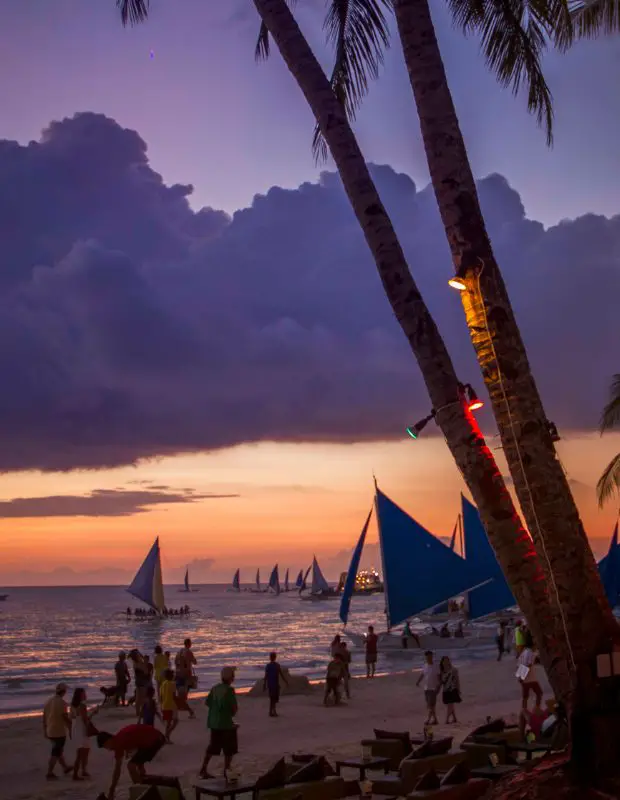
Did you know that the Philippines holds the record for the longest-running literary workshop in Asia? The Silliman University National Writers Workshop, which began in 1962, has nurtured some of the country’s most esteemed writers and poets.
Publishers reading manuscripts right now
These four commission books, carry the production cost themselves and pay the author. Each one publishes a route that works, and says plainly what it wants.
A faster route to readers
Publish your book worldwide on your terms
PublishDrive distributes ebooks, print books, and audiobooks to 50+ stores and 240,000+ libraries worldwide from one dashboard.
Affiliate disclosure: I may earn a commission if you become a paying PublishDrive customer through this link, at no extra cost to you.
1. Adarna House

The country’s best-known children’s publisher and, for a new writer, the most straightforward door on this page. Adarna House accepts unsolicited manuscripts by email, year round, at submissions@adarna.com.ph, addressed to Kata Garcia, its Product Development Officer and Senior Editor.
What it wants depends on what you have written. Short fiction, biography and history need the manuscript plus a one-page literary bio-data, with the genre and any literary prizes named on the first page. Chapter books and novels for readers aged 9 to 16 (a gap the house says it is deliberately trying to fill) need the completed manuscript, a 100-word synopsis, the genre, the target age and your bionote. Graphic novels have their own track, and illustrators send a résumé plus two or more samples of a consistent style, not a manuscript.
One detail worth reading twice: your manuscript does not need illustrations. Writers routinely pay an artist before submitting a picture book. Here it is unnecessary, and at some houses it actively counts against you. Submission guidelines.
Working on a book of your own? You can publish it yourself with PublishDrive (affiliate link).
2. Milflores Publishing
The most openly stated invitation in this entire list. Milflores says on its own site that it is open to unsolicited submissions, and it is specific about what it is looking for: storytelling with a commitment to deep truths, narrative non-fiction proposing ideas it has not seen before, K-12 textbook proposals, and the occasional picture book.
For a novel, send a description of the work with comparative titles, the target audience, a chapter outline and three chapters. For a children’s book, send the whole thing, with the concept and the reader’s target age. Already-illustrated picture books are excluded. Artists and illustrators are invited separately, with a CV, sample projects and links to their art. Everything goes as an attachment to info@milflorespublishing.com.
The house is candid about its own capacity: it says it has been receiving a lot lately and may not reply quickly, and that it does its best reading from the end of March to May. Aim for that window if you can wait. The submissions text sits on the landing page itself, not a dedicated URL. Submission guidelines.
3. OMF Literature

The country’s leading Christian publisher, and the one house here that welcomes proposals instead of finished manuscripts. Its How To Get Published page is blunt about that: do not send the manuscript straight away, fill in the OMF Lit book proposal form or write to publishing@omflit.com, then wait to be contacted.
Be equally clear-eyed about the criteria, because they are not only editorial. OMF Lit looks for writers who are born-again Christians in good standing in a Bible-believing church, passionate about drawing people to Christ through the written word, and willing to work closely with its book editors. The books it wants are original, Bible-based, broadly evangelical, relevant to Filipino Christians, and, in its own word, financially viable. If that describes your project, the fit is excellent and the route is short. If it does not, this is not a near miss, and the time is better spent elsewhere.
It runs hubs on Boni Avenue in Mandaluyong, at Robinsons Cybergate in Cebu City and on Tiongko Street in Davao City. Submission guidelines.
4. Summit Books

The book division of Summit Media, the lifestyle publisher behind Preview, Cosmopolitan, Esquire, Yummy and Smart Parenting in the Philippines. Its list runs to lifestyle, business, biography, memoir, self-help and trade titles, and its Pop Fiction imprint is one of the few mass-market commercial fiction lists in the country.
Summit Books accepts submissions with no window and no deadline, through the address published on its own About page: booksubmissions@summitmedia.com.ph. The same address serves Pop Fiction, which means a genre novel and a business book go to the same inbox, so say which you are sending.
One practical note. Its site is summitbooks.ph; there is an unrelated American imprint at summitbooks.com, and searching for the name alone will send you to the wrong one.
The university presses
Three scholarly publishers, and three very different current states. Academic presses work on peer review and long calendars, so expect months rather than weeks, and expect to be asked for a finished book, not an idea.
5. University of the Philippines Press

The publishing arm of the national university, in Diliman, Quezon City, and the most important literary press in the country. Its Philippine Writers Series was still adding titles in 2026, and it publishes Philippine literature, poetry, history, the social sciences and general scholarly work in English and Filipino.
It accepts submissions through a properly built hub, not an email address: How to Get Your Book Published, manuscript preparation guidelines for accepted work, an initial-submission manuscript form, and the standard contracts for authors, editors and translators published in advance so you can read the terms before you commit. Very few publishers anywhere do that, and it is worth reading the contract even if you submit somewhere else entirely.
Note the address carefully: it is /submissions/, plural. The singular /submission/ path you will find elsewhere still loads, but the page is empty. Submission guidelines.
6. Ateneo de Manila University Press

A serious scholarly and literary press in Quezon City, publishing cutting-edge scholarship on the Philippines alongside new directions in creative work. Its guidelines were last updated on 15 January 2026, which makes them the freshest set on this page.
The timing matters more than anything else here: the Press accepts manuscripts only from January to May each year, to leave room for review. Submit in September and nothing happens. Work goes by email to ed.unipress@ateneo.edu (emailed submissions only, with a physical copy produced later if asked), and every manuscript goes through double-blind peer review.
It reads finished work only. Book proposals and partial or work-in-progress manuscripts are ruled out except in exceptional and compelling cases, and theses and dissertations are excluded unless they have been genuinely rewritten in book form. That last restriction is the one people ignore most often, and it is the fastest way to be turned down. Submission guidelines.
7. De La Salle University Publishing House

Here the picture changes. DLSUPH publishes Philippine studies by established and new scholars, peer-reviewed research too specialised for commercial houses, undergraduate and graduate textbooks, and academic journals across education, business, economics and the sciences. That is its stated mission, and it is a good one.
The problem is where you can read it. The publishing house has no page on De La Salle’s current website: www.dlsu.edu.ph/research/publishing-house/ returns a 404. The vision and mission text, the staff list, the contact details and the author submission-guidelines PDF all survive only on the university’s legacy archive at old.dlsu.edu.ph, under a 2017 copyright notice.
So the honest position is that nothing about its current operations can be confirmed from a live, maintained page, and this entry claims nothing about them. The listed office is Yuchengco Hall Room 601, 2401 Taft Avenue, Manila, and the listed address is dlsupublishinghouse@dlsu.edu.ph. If you are a scholar with a Philippine studies manuscript, write and ask before you build a plan around it. Archived publishing house page.
Real publishers whose submission route has stopped working
Four established Philippine houses, all still trading, none of them currently telling a writer where to send work.
8. Anvil Publishing

The biggest name in this section by some distance. Anvil is the publishing arm of National Book Store, an eleven-time Publisher of the Year, based in Mandaluyong City, with a list spanning trade non-fiction, fiction, children’s books, textbooks, history and politics. It is unambiguously active. A Filipino edition of Noli Me Tangere was announced for September 2026, and it exhibits at the Philippine Book Festival.
Its website is another matter. Every path on anvilpublishing.com, including the homepage, the about page and the submissions page, returns a 559-byte response consisting of a PHP warning from its own wp-config file followed by a broken compressed stream. The server answers HTTP 200, so automated checks see a healthy site. Nothing renders in a browser.
That leaves no verifiable route, so this page makes no claim about one. The catalogues that survive on that domain are from 2019 and 2020. If you want to reach Anvil, its social accounts are actively staffed and the Mandaluyong office is real; treat anything you read about its submissions process elsewhere as unconfirmed until the site is repaired.
9. Abiva Publishing House
Founded in 1936 and the pioneer of Philippine textbook publishing, Abiva produces textbooks, reference works and learning materials from preschool to college. The head office is on G. Araneta Avenue in Quezon City, with offices in Cebu City and Davao City, and the site is current.
Its Abiva Authors page, “Write with Us”, is a genuine invitation to educators, complete with testimonials from academics who have written series for the company. What it does not contain is a process: no address, no format, no requirements, no next step. For a textbook publisher that is normal, because educational lists are commissioned, not acquired from strangers, but it means there is no route this page can point you at.
If you are a subject specialist who teaches the curriculum, the realistic approach is to write to the company directly, describe the course and level you can serve, and treat it as a professional pitch to a commissioning editor, not a manuscript sent to a slush pile. Abiva Authors.
10. Saint Matthew’s Publishing

Registered as St. Matthew’s Publishing Corporation, founded in 1989 by the late Vicente C. Catabijan Jr. and passed in 1994 to his eldest son Raymund S. Catabijan and to Isabel Diaz-Catabijan. It publishes K-12 and tertiary textbooks, workbooks, reference materials and teacher’s manuals, and children’s books through its Kahel Press imprint.
Its Submissions page is live, and it is worth being precise about what is on it. The page asks for portfolios from illustrators, because Kahel Press is looking for artists for a picture book project, and that is all it asks for. There is no writer’s route on it, and none elsewhere on the site.
Which makes it a real opportunity, just not the one the heading implies. If you draw, this is an open call with a named project behind it. If you write textbooks, the honest advice is the same as for Abiva: approach the company as a specialist offering to serve a specific curriculum slot. Illustrator portfolio call.
Keep your publishing moving
Self-publish without waiting on submissions
PublishDrive lets you distribute your ebook, print book, or audiobook worldwide while managing your catalog from one dashboard.
Affiliate disclosure: I may earn a commission if you become a paying PublishDrive customer through this link, at no extra cost to you.
11. New Day Publishers

A Quezon City house with a distinctive backlist: theology, Filipiniana, Southeast Asian studies, history, literary work and children’s books, plus a long association with the country’s evangelical churches. It is still going: its own social channels were posting into 2025, and a new location beside St. Andrew’s Chapel was being announced.
Its website is a placeholder. Every address on newdaypublishers.com, including the submissions.php page that this and every other roundup has linked to, serves the same document: one JPEG of the shopfront, no navigation, no text, no contact details. Like Anvil’s, it answers HTTP 200 and therefore passes any automated check.
There is no route here to verify and this entry asserts none. The company is easiest to reach through the social accounts it does maintain, and its books are stocked in the usual Manila bookshops.
Publishing and printing services you pay for
The four companies below are legitimate businesses, and none of them is a publisher in the sense the first seven entries are. Here the money flows from the author to the company, not the other way round. That is a reasonable thing to buy, but you are buying a service, so ask service questions: what exactly is itemised in the quote, who distributes the finished book and to which shops, what royalty on net, who owns the ISBN and the print files if you walk away, and what happens if you want to move.
12. Central Books

Central Book Supply, Inc. is best known as a bookshop chain (law, college and general stores, strong in codals, reviewers and legal reference), and it runs the most established author-funded publishing service in the country. It calls the model Entrepreneurial Publishing, and says it has brought more than 800 new authors and over 2,000 titles to market since launching the service in 2010.
The pitch is aimed squarely at the problem it names: traditional self-publishing meant paying for a minimum print run of a thousand copies and sitting on the inventory for years. Instead you choose from basic publishing packages plus optional add-ons, and a print-ready file can be a finished book in ten working days. Published rates are on the site, which is more transparency than most of this category offers.
Do the arithmetic on distribution before you sign. Being sold in Central’s own shops is a real advantage, and it is also the extent of the retail promise. Publish on demand.
13. Bookshelf PH

Bookshelf PH is widely listed as an independent publishing house that publishes Filipino writers. That is not how the company describes itself. It is an online bookshop whose publishing arm sells what its own page calls hybrid publishing services: end-to-end book production, plus à la carte writing, editing and public relations for authors and brands, a self-publishing concierge, a consignment programme for existing titles, and a commission-a-book route pitched at business leaders who want a book for brand recall.
It does put real books into the world, including Fearless Filipinas, Sari-sari Stories and Sabrina Victoria’s The Princess of Himmapan, and the shop side is well run, with a money-back guarantee and same-day Metro Manila delivery. The distinction that matters is simply who pays.
One thing to know before you write to them: the footer link on their own homepage labelled “Manuscript submissions” points at a page that returns a 404. Everything else on the site works. Contact is hello@bookshelf.com.ph. Hybrid publishing services.
14. Artpost Asia

ArtPostAsia, Inc. is a publishing and design group in Salcedo Village, Makati, making beautifully photographed and illustrated books on Asian art, culture and heritage: museum collections, monographs on Filipino painters, architectural histories like the Art Deco heritage volume with Ivan Man Dy and Gerard Lico. The production values are high and the books win their place in serious collections.
The business model is commissioned work. ArtPostAsia runs the whole publication process to a brief: concept and structure, creative direction, research, photography, editorial planning, printing, marketing and distribution. A large part of its list is corporate and commemorative books produced for companies and institutions marking a milestone. The relationship starts with a conversation about a project and a budget, not with a manuscript arriving unannounced, and the site publishes no policy for writers.
If you are a curator, a foundation, an estate or a company with a visual subject and funding behind it, this is the right kind of partner. If you have written a novel, it is not. Contact is info@artpostasia.com. End-to-end publishing.
15. Books on Demand Philippines
A printer in Ortigas Center, Pasig City. A good one, but a printer. Books on Demand handles corporate print work of every kind, from annual reports and product catalogues to calendars and business cards, and for authors and small publishers it will print as few as one copy, which is the whole point of the machine.
That short-run capability is what earns it a place here. A chapbook of poems, your grandmother’s journals, a family history, a collection of recipes: these are books that no publisher will ever fund and that used to require a thousand-copy print run to exist at all. It also runs an Espresso Book Machine over a catalogue of seven to eight million public-domain and licensed titles, printing a physical copy in about ten minutes.
What it does not do is choose books. There is no editorial acquisition and no policy for writers, because it is not that kind of company. You arrive with a finished file and a budget. Contact is ebmbdpi@gmail.com. Services.
How to approach a Philippine publisher
Four things before you send anything.
Check the link yourself, first. Publishers move their sites, universities restructure and hosting breaks, and nobody updates the lists that point at them. A 200 response is not proof of anything: Anvil’s and New Day’s dead sites both return one.
The market is smaller than the list implies. Set aside the paid services, the printer and the textbook houses, and you are looking at roughly six realistic destinations for a trade manuscript, three of them university presses. That is not discouraging so much as clarifying: research each one properly instead of firing off fifteen identical emails, because the fifteen do not exist.
Fit is unusually explicit here. OMF Lit wants a practising evangelical Christian. Adarna wants a children’s writer. Ateneo wants a peer-reviewable scholarly or literary manuscript, in a four-month window. Milflores wants comparative titles and a chapter outline. Each of those is a stated filter, published in advance, and ignoring it is the single most common reason a submission is never answered.
Language is a real decision, not an afterthought. English still dominates commercially, especially in Metro Manila, but Filipino-language and regional-language publishing is where several of these houses do their most distinctive work: Adarna in children’s books, UP Press across literature, New Day in Filipiniana. Ask which language a house buys in before you assume.
Conclusion
The good news for a Filipino writer is concentrated, not thin. Adarna House and Milflores Publishing both read unsolicited work year round and say precisely what they want. Summit Books keeps an open inbox with no deadline. OMF Literature answers proposals within a clearly stated remit. UP Press and Ateneo run proper academic submission processes, and UP Press publishes its author contracts before you sign anything. That is six real doors, which for a market this size is respectable.
The rest of the list is useful for what it is. Two textbook houses commission books instead of acquiring them. Two well-known publishers have websites that have stopped working. Four companies sell services to authors, competently and openly, and belong in a different mental category from the first six.
If none of them fits, the hybrid publishing companies guide covers the author-funded route in more depth, traditional publishers covers the international houses that read unagented work, Japanese book publishing companies continues the tour of Asian markets, and the full 2,000+ publishing companies directory is the place to find a press that already publishes books like yours.

Rafal Reyzer
Hey there, welcome to my blog! I'm a full-time entrepreneur building two companies, a digital marketer, and a content creator with 10+ years of experience. I started RafalReyzer.com to provide you with great tools and strategies you can use to become a proficient digital marketer and achieve freedom through online creativity. My site is a one-stop shop for digital marketers, and content enthusiasts who want to be independent, earn more money, and create beautiful things. Explore my journey here, and don't forget to get in touch if you need help with digital marketing.